
When your dog or cat gets into something toxic, how worried should you be? Unfortunately, you often cannot tell by watching them. Chocolate, grapes and raisins, xylitol, onions and garlic, lilies, and human medications can all cause serious poisoning, but the risk depends on exactly what your pet was exposed to, how much they swallowed, their size, and how long ago it happened. Some toxins cause obvious signs quickly, while others can damage the kidneys, liver, blood cells, or other organs before your pet looks sick. That is why a suspected poisoning is a reason to call right away rather than waiting for vomiting, weakness, tremors, or other symptoms to appear.
With poisoning, getting veterinary help early can change the entire outcome. Depending on the toxin and when your pet was exposed, treatment may include safely removing or binding what remains in the gastrointestinal tract, giving an antidote when one is available, supporting blood pressure and hydration with IV fluids, controlling seizures or other symptoms, and monitoring bloodwork for developing organ damage. Veterinary Emergency and Specialty Center of Northern Arizona treats poisoning cases in Flagstaff from Friday evening through Monday morning. If you think your pet swallowed something dangerous over the weekend, do not wait for them to act sick. Bring the packaging, medication bottle, plant, or other identifying information if you have it, and call us while you are on the way in.
The First Hour After a Toxin Exposure
- Dose, timing, and body size decide how dangerous an exposure is, so a mouthful that means nothing to a 90-pound Lab can be an emergency for a kitten.
- Chocolate, xylitol, grapes, onions and garlic, lilies, rodent bait, and human medications cause most of the poisonings we treat.
- Never make your pet vomit at home unless a veterinarian or a toxicologist tells you to, because some substances do more damage coming back up.
- The best treatment window usually opens before symptoms do, so a suspected exposure is a phone call now rather than a wait-and-see.
How Fast Do I Need to Act If My Dog Ate Something Toxic?
Fast usually means within the first hour or two, while material is still sitting in the stomach, and emergency care started before symptoms appear is far more likely to work than treatment started once a pet is already sick.
Three things shape the risk: what went down, how much of it, and how much dog or cat is on the other end. A teaspoon that's trivial for a Great Dane is serious in a Chihuahua, and puppies and kittens sit at the sharp end of that math. Species matters too. Cats lack some of the liver enzymes dogs use on common drugs, so a tablet a Lab shrugs off can kill the cat who licked the same spill. A pet who already has organ issues, like an older cat with kidney disease or toy breed dog with a liver shunt, can be at even higher risk.
This isn't a question for a search bar at 11pm on a Saturday. Our team treats suspected toxin exposures all weekend, and bloodwork shows whether the liver, kidneys, or red blood cells have started to react.
Which Foods Are Most Likely to Poison a Dog or Cat?
Chocolate, xylitol, grapes and raisins, onions and garlic, and macadamia nuts cause most of the food poisonings we treat.
Chocolate toxicity scales with two things: how dark the chocolate is and how small the dog is. A few squares of baking chocolate can be a real emergency for a 12-pound terrier, while the same weight of milk chocolate may not be.
Xylitol hides in sugar-free gum, mints, peanut butter, protein bars, and some liquid medications, and in dogs it can drop blood sugar to dangerous levels within 10 to 60 minutes of a single piece. It's often labeled birch sugar, which sails past a quick glance at a label.
| Food | Why it's a problem | What we watch for |
| Chocolate, coffee, tea | Overstimulates the heart and nervous system | Restlessness, racing heart, tremors |
| Xylitol or birch sugar | Floods a dog with insulin, and can injure the liver | Weakness or collapse within an hour |
| Grapes, raisins, currants | Sudden kidney failure at unpredictable doses | Vomiting, then falling urine output over 24 to 72 hours |
| Onion, garlic, chives | Damage red blood cells, raw or cooked or powdered | Pale gums, weakness, dark urine, days later |
| Macadamia nuts | A temporary neurologic reaction in dogs | Wobbly back legs, tremors, fever within 12 hours |
| Alcohol and raw yeast dough | Dough keeps rising and fermenting in the stomach | Swollen belly, disorientation, low temperature |
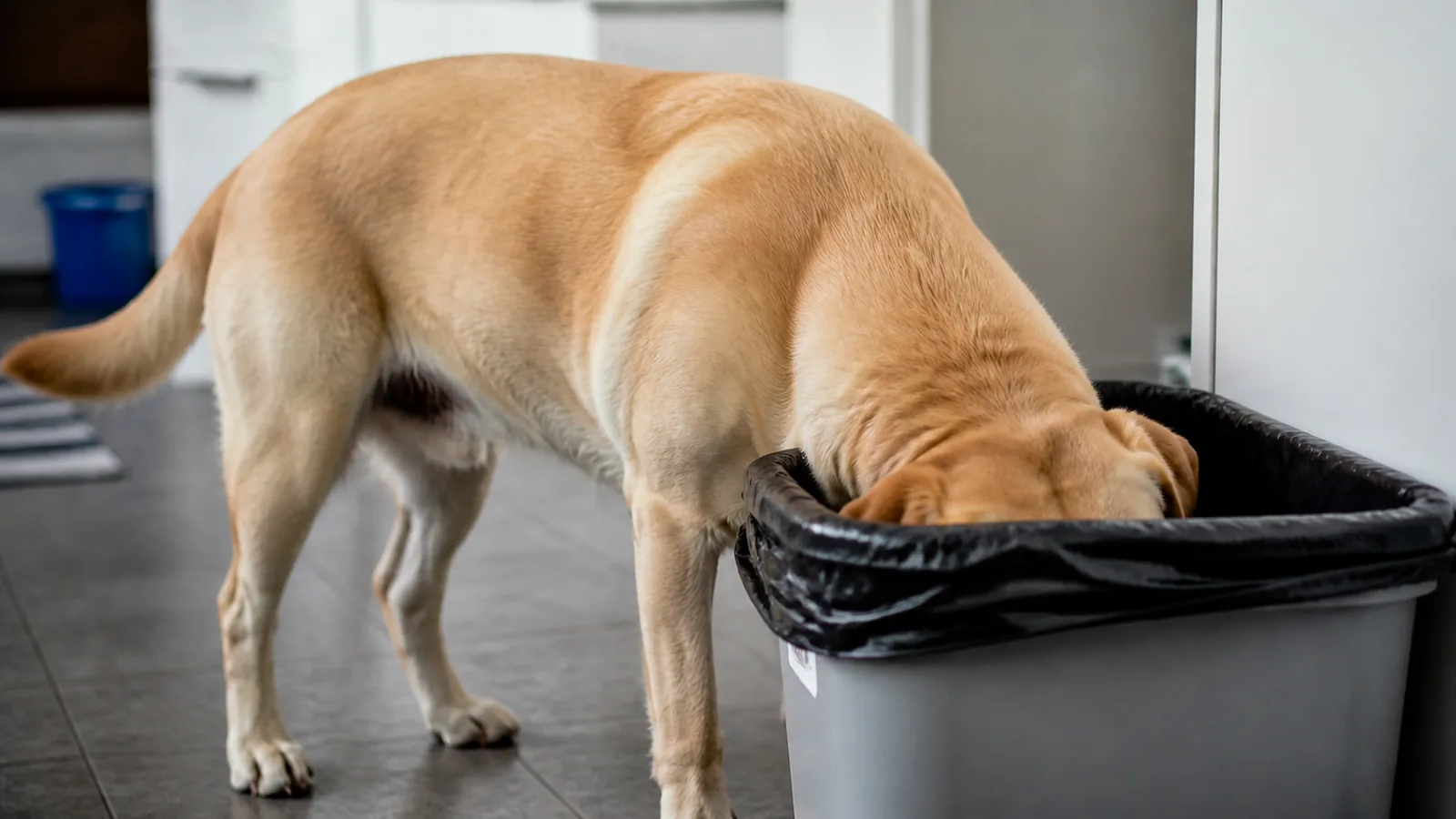
Vomiting and diarrhea are the usual opening signs, which is unhelpfully vague, since that's also what a dog looks like after raiding the trash. What happens next depends on the toxin and the clock: activated charcoal to bind what's left in the gut, sugar support for xylitol, and hospitalization on IV fluids when kidney numbers need watching.
What About the Grapevine in the Backyard?
Grapes, raisins, and currants can cause sudden kidney failure, and the dose that does it is unpredictable. Some dogs eat a handful and stay fine. Others crash on three grapes. The toxic component in grapes and raisins appears to be tartaric acid, which is also why cream of tartar and tamarind belong on the same watch list as the fruit itself. Since there's no safe amount to point to, every ingestion gets handled as an emergency. Changes in urination, especially a dog who suddenly makes very little urine, are a late sign rather than an early warning.
What Else Around the House Can Poison a Pet?
Food is only the start, since the list of potentially dangerous items in an average home runs straight through the medicine cabinet, the cleaning cupboard, the garage shelf, and the garden shed. Plants, rodent bait, and a guest's handbag left by the door belong on that same list.
Which Plants Should Dog and Cat Families Know?
You can't judge a plant's safety by looking at it, and the searchable list of toxic and non-toxic plants runs to hundreds of species, so a new pot is worth thirty seconds of checking before it comes through the front door.
- Indoor: For cats, lily toxicity is the one to memorize, because petals, leaves, pollen, and even the water in the vase can cause fatal kidney failure, and a cat who brushes past a bouquet and then grooms her fur has already been exposed. Sago palm is the dog equivalent, where one seed can destroy the liver. Pothos and dieffenbachia cause burning and drooling from ulceration in the mouth and esophagus when chewed.
- Outdoor: Oleander, foxglove, and lily of the valley disrupt heart rhythm in small amounts. Azaleas, spring bulbs, and autumn crocus run from hard vomiting to organ damage.
Bag a piece of whatever your pet chewed, since our veterinarians can work from the leaf far faster than from a description.
What If My Dog Eats a Wild Mushroom?
Yards around Flagstaff sprout mushrooms overnight after a monsoon rain, and dogs investigate with their mouths before anyone calls them off. Mushroom toxicity ranges from one rough night of stomach upset to liver failure that arrives a day or two later, often after the dog has seemed to bounce back. Other species hit the nervous system, causing seizures and tremors within an hour, or work quietly on the kidneys.
Identification from a photo is hard even for mycologists, so unknown ingestions get treated as toxic until proven otherwise. Photograph it where it grew, pull one with the base intact, and keep dogs leashed off-trail in the pines, where the harmless and the deadly grow together.
Rodenticides and Insect Bait
Not all bait works the same way, and rodenticide safety starts with knowing which active ingredient is in the box, because anticoagulants, bromethalin, and cholecalciferol each call for a completely different treatment.
| Bait type | How it works | Timeline |
| Anticoagulants (brodifacoum, bromadiolone) | Block vitamin K so blood stops clotting | Bleeding at three to five days; vitamin K1 treats it |
| Bromethalin | Swelling in the brain and spinal cord | Tremors or paralysis within hours to days; no antidote |
| Cholecalciferol (vitamin D3) | Drives calcium up until the kidneys fail | Illness over one to three days, needing hospitalization |
| Zinc phosphide (mole and gopher bait) | Releases a toxic gas in the stomach | Rapid vomiting, and the gas is hazardous to people too |
A dog can eat anticoagulant bait Sunday and look perfect until Wednesday, when internal bleeding shows up as labored breathing, pale gums, or a sudden refusal to move. Keep the package, because a brand name doesn't tell us the ingredient and formulas change. "Pet-safe" usually describes the station, not the poison inside, and a determined terrier can open one. Secondary poisoning is also a concern when a pet eats a dead rat or mouse who ingested the rodenticide.
Edibles, Vape Oil, and Recreational Drugs
Marijuana safety gets complicated by edibles, where THC arrives packaged with chocolate, butter, or a sugar substitute, so one brownie can be three separate poisonings at the same time. Concentrates and vape oils carry many times the THC of dried flower, and swallowed nicotine liquid can stop a small dog's heart.
The classic picture is a wobbly dog with wide pupils who dribbles urine and startles at every sound. Opioids and stimulants look nothing like that, running toward pinpoint pupils and slow breathing on one side, a racing heart on the other. Tell us exactly what was in the house. We're not interested in anything except getting your pet through the night.
Human Medications
More dogs land here from the family medicine cabinet than from the pantry. Never give your pet a human pain reliever. Ibuprofen and naproxen cause stomach ulcers and kidney failure, and cats can't process acetaminophen at all, so one tablet can be fatal. Antidepressants, ADHD stimulants, sleep aids, blood pressure pills, and decongestants make up most of the rest.
Childproof is not dog-proof. A pill bottle is a rattling chew toy, and a weekly organizer pops open with almost no effort. Keep medication behind a latched cabinet door rather than in a purse or a bedside drawer, count what scatters when a bottle drops, and call us before giving anything off your own shelf.
Cleaners, Antifreeze, and Garage Chemicals
Ethylene glycol antifreeze tastes sweet, and a few tablespoons off a cold garage floor can destroy a cat's kidneys. It also carries the shortest window of any exposure here, measured in hours rather than days.
Concentrated cleaners, drain openers, and solvents burn the mouth and esophagus, which is exactly why bringing them back up is the wrong move. Fertilizers with bone meal or iron, slug bait, and lawn pesticides cause anything from severe stomach upset to tremors. Cats are also highly sensitive to permethrin, an ingredient in some canine flea products, and putting a dog's spot-on treatment on a cat causes violent shaking. When a chemical lands on the coat, keep your pet from licking at it and wash the area with liquid dish soap and warm water before you leave the house. A pet who is collapsed, cold, and pale is in shock and needs to be in the car on the way to us rather than waiting on a call. Store chemicals high and wipe spills before pets come back in.
My Pet Just Ate Something. What Do I Do Right Now?
Separate your pet from whatever is left, then call before trying anything else. Never make them vomit at home unless a veterinarian or a toxicologist tells you to, because caustic products and sharp packaging do more damage coming back up. Grab the wrapper, the bottle, or a piece of the plant on your way out the door.
- What we'll ask: your pet's weight, what they got into, the strength printed on the package, how much is missing, and what time it happened. One photo answers most of that.
- What not to try: salt, oil, milk, and hydrogen peroxide given without direction can create a second emergency on top of the first one.
- Who else to call: The Pet Poison Helpline and ASPCA Poison Control answer around the clock and gives you a case number, which lets whoever treats your pet build on the toxicologist's dosing math instead of starting the calculations over.
- If you need to ID a plant or mushroom: A Facebook group run by plant and mushroom experts all over the world is a great resource for fast identification. Take photos, and follow the posting guidelines; if you aren’t sure what a plant or mushroom is, the Pet Poison Helpline and ASPCA Poison Control will actually refer you to this group first before giving you guidance.
- On the drive: Call from the road so we know what's coming and are ready when you pull up.
A cat who ate lily pollen and a dog who ate bait both look normal during the exact hours when treatment works best.
How Do I Pet-Proof a House Room by Room?
Most of pet-proofing your home comes down to height and latches, with guest bags off the floor, medications out of nightstand drawers, and childproof catches on every cabinet under a sink. Crouch to your dog's eye level in one room a week and you'll spot the rest.
- Kitchen and pantry: Gum, baking chocolate, and onion powder go behind a cupboard door rather than in a counter bowl, and the trash gets a latched lid.
- Bathroom and bedroom: Pills live in a closed cabinet, and a dropped tablet gets found before the puppy does.
- Garage and utility: Antifreeze, ice melt, and bait move to a high shelf, and spills get wiped rather than rinsed toward the door.
- Yard and garden: Learn what's already planted, skip bone meal where dogs dig, and sweep the yard after rain.
- Guests and holidays: Visitors set bags on the floor, and a holiday table puts chocolate, raisins, and lilies in reach on the busiest day of the year.
Questions We Hear After a Pet Gets Into Something
My dog ate something an hour ago and seems fine. Should I still call?
That quiet hour is a reason to call, not a reason to relax. Most poisons leave a gap between the swallow and the symptoms, and with grapes, lilies, and anticoagulant bait, that gap can run a day or more while damage builds underneath. Decontamination also does the most good early, while material sits in the stomach. A call that ends with "you can watch him at home tonight" is a good outcome.
Is hydrogen peroxide safe for making a dog vomit at home?
Hydrogen peroxide is only appropriate when a veterinarian or a toxicologist walks you through it, and it is never used in cats, where it causes severe stomach inflammation. The dose is easy to get wrong, and a dazed or seizing pet can inhale what comes up. Call first.
Do dogs and cats get poisoned by the same things?
The overlap is smaller than most families expect. Dogs get into volume: candy, bait, dropped pills, whatever hit the floor. Cats are poisoned by small exposures they groom off their coat, especially lilies, permethrin flea products meant for dogs, acetaminophen, and concentrated essential oils. With both species at home, assume anything risky for one is worth locking away from both.
Toxin-Proofing Your Home and Knowing When to Call
Most of the poisonings we see start with something ordinary: a purse set down by the door, baking chocolate left out at the end of a recipe, a bait station behind the water heater. That's the hopeful part, because ordinary things can be moved tonight. If you're unsure whether something in your house is a risk for your dog or your cat, reach out and we'll help you sort out what's worth locking up.
Veterinary Emergency and Specialty Center of Northern Arizona is open for emergencies in Flagstaff from Friday at 5pm through Monday at 8am, overnight included, and a suspected poisoning is always worth the call rather than the wait.