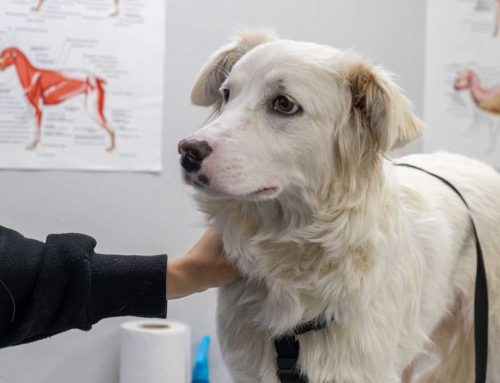


Knowing if your pet needs an emergency visit comes down to the specific signs in front of you, not how brave your pet is acting. Dogs and cats instinctively hide pain and illness, so a symptom you can actually see usually means the problem has been building for a while. Trouble breathing, a sudden collapse, uncontrolled bleeding, a seizure more than five minutes long, a swollen belly with unproductive retching, or a male cat straining in the litter box with nothing coming out need to be seen right away. Changes in appetite and energy, a new cough, multiple seizures, pain, or vomiting and diarrhea often need same-day care, as they could be an early sign of something serious and turn into an emergency if you wait.
Veterinary Emergency and Specialty Center of Northern Arizona is Flagstaff's weekend emergency hospital, open from Friday at 5pm straight through Monday at 8am. We run bloodwork here, along with digital X-ray, ultrasound, and CT imaging, which is often what it takes to tell a stable problem from one that needs surgery. Our doctors handle critical care and emergency surgery, and we take time to explain what is going on inside your pet so the decision in front of you feels clear. If your pet takes a turn and you cannot tell whether it can wait, give us a call and we will talk it through with you.
Essential Points About At-Home Exams
- Your own pet's baseline for appetite, energy, gum color, and breathing at rest is what makes an off day obvious.
- A two-minute check at home gives us better information when you call, but it should never delay the drive when something looks serious.
- Trouble breathing, collapse, a long seizure, a male cat straining to urinate, a swollen belly with retching, and any suspected toxin are go-now problems.
What Does Normal Look Like for Your Own Pet?
Normal is specific to the animal in front of you: how fast dinner disappears, where they sleep, how they greet you at the door, how quietly they breathe on the couch. That specificity is why you notice an off day before anyone else can. A picky poodle who often skips breakfast might not be a worry; a labrador who has never missed a crumb on the floor raises concern when they skip dinner.
The misses are almost always behavioral rather than dramatic. A cat who's traded the sunny windowsill for a spot under the bed. A dog who always gets evening zoomies but tonight sleeps through it. Posture says plenty too: a hunched back, a tucked belly, a pet sitting upright instead of lying down, or one standing with their elbows pushed out all signal that something isn’t right.
A Two-Minute Home Check Before You Call
A quick home exam covering gum color, hydration, and breathing rate takes about two minutes and gives us a much clearer starting point when you call. Three quick checks you can do at home:
- Lift the lip first. Healthy gums are moist and bubblegum pink, and pressing a thumb against them should leave color flooding back in under two seconds. Pale or white suggests blood loss or anemia, brick red points toward heat or shock, gray or blue toward an oxygen problem, and yellow toward liver trouble or red cells breaking down.
- For hydration, lift the skin between the shoulder blades and let go; skin that stays peaked is a dehydration sign. You can also check the gums for hydration. Moist gums are normal; tacky or dry gums are not.
- Count breaths for thirty seconds while your pet rests, then double it. Most dogs and cats sit comfortably under 30 at rest. Between 30 and 40 warrant a call, and over 40 means come in right away.
Which Pet Symptoms Are Emergencies?
These are the presentations where minutes change the outcome and the right move is to start driving and call from the road. Nothing here improves with observation, and several get harder to treat by the hour. When in doubt, treat it as urgent.
- Breathing that looks like work. Open-mouth breathing in a cat, a neck stretched forward with the elbows held away from the body, noisy breathing, or a resting rate climbing past 40 breaths a minute all point to respiratory distress. Trouble breathing combined with sudden facial swelling, collapse, and vomiting can be an anaphylactic allergic reaction. A pet who can't breathe needs emergency oxygen support and as little handling as possible.
- Collapse and sudden weakness. The causes run wide: heart disease, internal bleeding from a ruptured splenic mass, severe anemia, heatstroke, and exercise-induced collapse in some working breeds.
- Seizures. During the episode, your job is safety: move furniture out of the way, keep your hands clear of the mouth, and note the start time. Anything past five minutes, more than one episode in 24 hours, a first-ever seizure in a young puppy or a senior, or a pet who doesn't come back to themselves afterward needs emergency seizure care.
- A pet who can't urinate. Straining in the litter box, crying, or producing nothing at all may mean a urethral obstruction, which turns life threatening within a day or two as toxins and potassium build up. It’s especially common in male cats.
- A swollen belly and unproductive retching. A drum-tight abdomen, pacing, and heavy drooling in a large, deep-chested dog point to gastric dilatation-volvulus, where the stomach twists on itself and cuts off its own blood supply. Great Danes, setters, standard poodles, and boxers are the classic patients. There's no home remedy, and emergency GDV surgery goes best when treated quickly.
- Anything you think they ate. Don't wait for symptoms before you call. The usual suspects in a house are human medications, rodent bait, antifreeze, xylitol, grapes and raisins, dark chocolate, cannabis edibles, and concentrated essential oils. A cat who brushes past a bouquet and grooms the pollen off her fur can develop kidney failure from lily toxicity. Do not make your pet vomit at home unless we tell you to, and bring the packaging, because knowing what's on board changes how we treat toxin exposure.
What Pet Symptoms Need A Same-Day Visit?
Plenty of problems live in the middle: not a sprint to the car, but not something to watch across a long weekend either. Anything new, anything worsening by the hour, and anything paired with lethargy earns a look today.
- Vomiting, diarrhea, and a pet who won't eat. Multiple episodes, blood in either direction, a painful belly, or a flat pet who won't drink are all causes for concern. Vomiting paired with bloody diarrhea in an unvaccinated puppy raises the question of parvovirus, which can dehydrate a young dog dangerously within hours. Pancreatitis, a swallowed sock, and early bloat all announce themselves as vomiting and diarrhea first, which waiting on makes worse by the minute.
- Circling, head tilt, and wobbly back legs. Vestibular disease frequently settles on its own over several days, but inner ear infections, strokes, toxins, and brain tumors can cause identical symptoms. A long-backed or small dog who suddenly refuses the couch, holds his back hunched, or scuffs a hind foot may be in the early hours of intervertebral disc disease, which can progress to paralysis before morning. Cats also develop paralysis of their back legs when a blood clot from heart disease lodges and blocks blood flow, called a saddle thrombus.
- Straining, bloody urine, and reproductive problems. Frequent trips with almost nothing produced, blood, and accidents from a house-trained pet usually mean an infection or bladder stones, and cats often show urinary tract symptoms by peeing outside the box or over-grooming their belly. An unspayed female who's drinking heavily and leaking discharge a few weeks after a heat cycle may have pyometra, an infected uterus that needs surgery and can turn septic quickly. In males, a penis that won't retract or an erection that doesn't resolve damages tissue within hours.
Other same-day signs sort neatly by body system.
| What you're seeing | Why it earns a visit today |
| Eyes: squinting, pawing at the face, a cloudy or blue cornea, sudden redness, or an eye pushed out of the socket | Ulcers and pressure changes can cost vision within hours, and a cone on the drive keeps your pet from rubbing more damage in. |
| Ears: violent head shaking, digging at one side, a new tilt, or an ear flap swollen like a pillow | Infection, a foxtail in the canal, and a ruptured eardrum all hurt, and a swollen flap is a hematoma that can heal the ear permanently crumpled. |
| Airways: a cough that starts suddenly, worsens at night or with exercise, or violent nonstop sneezing | Nasal foxtails need prompt removal, and a night cough in an older small dog or any coughing cat can signal heart disease. |
| Skin: hives, a puffy muzzle, or chewing that opens raw sores in an afternoon | Hives plus any change in breathing is anaphylaxis, and a hot spot can double in size overnight. |
| Pain: a new limp, refusing stairs, a hunched back, panting at rest, or a pet who's suddenly antisocial | Fractures often start out looking like a mild limp. Any pain deserves prompt treatment and medications for comfort. |
| Mouth: new drooling, dropping food, pawing at the muzzle, or a broken tooth | Drooling can mean nausea, dental pain, a stick wedged across the palate, a toxin, or a neurologic problem, and an exposed tooth root or fractured jaw hurts badly. |
While you wait, never give human pain medication. Ibuprofen and naproxen cause stomach ulcers and kidney failure in pets, and a single Tylenol can be fatal to a cat.
When Does a Wound or Bite Need More Than First Aid?
Bleeding that won't quit after five solid minutes of pressure, a wound deep enough to gape, anything over a joint or on the face, and any bite from another animal all need to be seen. What shows on the surface says very little about the damage underneath it.
Bleeding you can't stop: hold a clean cloth firmly in place instead of lifting it every few seconds to peek, and raise the limb if your pet will allow it. Never wrap a leg tight enough to cut off circulation.
Bleeding that doesn't add up: pinpoint red dots on the gums or belly, bruises with no injury behind them, a nosebleed, or blood in the stool suggests a clotting problem rather than a wound, and low platelets and rodent bait both sit on that list. Bloodwork sorts it out the same day.
Punctures and bites: skin closes over within hours while bacteria track deep along the tissue, which is how a small hole becomes a hot, painful abscess three days later. On northern Arizona trails, a rapidly swelling muzzle or paw with two puncture marks means rattlesnake envenomation until proven otherwise, and the swelling and tissue damage keep progressing for hours after the bite. Carry your pet if you can, keep them still, and leave the ice packs and tourniquets alone, because snake bite treatment belongs in a hospital.
Why Does a Pet Who Seems Fine After an Accident Still Need an Exam?
Adrenaline is an excellent painkiller and a terrible diagnostician. After a hard impact most pets get up and move around normally, while a bruised lung, a torn diaphragm, or slow bleeding into the abdomen builds quietly over the next several hours until it turns into shock.
A cat who falls from a balcony or an open second-story window can walk away looking unbothered and still carry the chest, palate, and limb injuries that define high-rise syndrome. Being clipped by a car, shaken by a larger dog, or stepped on as a kitten belongs in the same group. Trauma evaluation usually means chest and abdominal X-rays, an ultrasound look for free fluid, and a stretch of monitoring in the hospital, since bruised lungs often look worst six to twelve hours later. For head, spine, and complicated fractures, CT shows us detail that flat images can't.
Electricity deserves its own note. Puppies and kittens who chew a lamp cord can burn the corners of the mouth and develop fluid in the lungs hours afterward. If you find your pet against a cord, don't touch them until the power is off at the breaker, then come in even if they look fine.
What Should You Have Ready Before an Emergency Happens?
Looking up an address while your pet struggles in the back seat is the worst possible moment to do it. A small kit and a few saved details take one quiet afternoon to put together.
Knowing the basics of pet first aid, including how to muzzle a painful dog safely and how to hold steady pressure on a bleeding wound, matters most in the twenty minutes before you reach us.
| Keep on hand | Why |
| Our number and address saved, plus the nearest open hospital for weekdays | Nobody navigates well while worried |
| Gauze, self-adhesive wrap, a clean towel, sterile saline, and a muzzle that fits | Even a gentle pet may bite when hurting, and a towel doubles as a cat stretcher |
| A carrier you can grab without a hunt, and a slip lead by the door | A loose dog in a parking lot is a second emergency |
| Photos of vaccine records and recent lab results | Vaccine history changes what we worry about, and old lab values give us a comparison |
| A current medication list with doses, plus any container your pet got into | Ingredients and amounts drive treatment decisions |
Questions We Hear Most
Should I call first, or just come in?
Call, ideally from the road with someone else driving. A heads-up lets us get a treatment area and the right hands ready before you pull in. If your pet is bleeding hard, seizing, or struggling to breathe, skip the call and come straight in.
What do I do if something is stuck in my pet's mouth?
Look, but don't dig. Blind finger sweeps push objects farther back and get fingers bitten. A pet who can still cough or breathe should be kept calm on the drive, since coughing moves things better than panic does. Gagging, pawing at the muzzle, or an inability to move air due to choking or oral foreign objects needs care immediately. String hanging from the mouth should never be pulled.
They ate something an hour ago but seem completely fine. Does that still count?
It counts. Most poisons have a lag, and the window where decontamination works is often the first couple of hours, well before your pet looks sick. Call with the product name, the strength, and roughly how much disappeared. For a toxicology consult while you're on the way, the ASPCA Animal Poison Control Center is available at 888-426-4435.
Trust the Feeling That Something Is Off
You know how your pet greets you at the door, what their breathing sounds like at 2am, and whether tonight looks different. That instinct is real information, and it's usually right. Veterinary Emergency and Specialty Center of Northern Arizona is open Friday evening through Monday morning, and we would far rather see a Flagstaff pet who turns out to be fine than meet one several hours too late.
If something changes this weekend and you can't tell whether it can wait, reach out and we'll help you make the call together.