
Chronic diarrhea, the kind that lasts more than two or three weeks or keeps coming back, usually calls for a scheduled workup rather than an emergency visit. It becomes an emergency when your pet starts losing ground faster than their body can keep up: large amounts of blood or black, tarry stool, vomiting alongside the diarrhea so your pet can't keep water down, a belly that's painful or swollen, pale gums, weakness or collapse, or a pet who has stopped eating. Puppies, kittens, small breeds, and seniors reach that point sooner. Behind the diarrhea itself sits a wide range of possible causes, from parasites and food reactions to inflammatory bowel disease, hormone problems, partial blockages, and cancer.
Veterinary Emergency and Specialty Center of Northern Arizona sees Flagstaff pets whose digestive trouble has been building quietly for months and then finally tips over. We're open for emergencies from Friday evening through Monday morning, with bloodwork and imaging here to show how dehydrated your pet has become and whether the vomiting and diarrhea point to a blockage, an infection, or chronic disease underneath. We take time to explain what's actually behind your pet's illness, because a night of treatment helps most when you also leave knowing what caused it. If your pet is showing any of those urgent signs, call us instead of waiting to see whether morning brings improvement.
What to Know When Diarrhea Won't Go Away
- Diarrhea that lasts more than two or three weeks, or comes and goes for months, has an underlying cause worth finding, even when your pet seems otherwise fine.
- Blood, vomiting, a painful belly, pale gums, weakness, or a pet who stops eating or drinking means chronic diarrhea has turned urgent.
- Young, tiny, and senior pets dehydrate faster, so they get less time before a visit becomes necessary.
- Causes range from parasites and food reactions to inflammatory bowel disease, pancreas and hormone problems, partial blockages, and cancer, and testing is what sorts them out.
What Counts as Chronic Diarrhea in Dogs and Cats?
Chronic diarrhea is loose or watery stool that lasts longer than two to three weeks, or that clears up and keeps returning. One bad night after a raided trash can is a different problem than diarrhea that comes back every few weeks, and the second pattern points toward an underlying condition rather than a one-off dietary slip.
Where the trouble starts changes what you see at home. Problems in the small intestine tend to cause larger amounts of loose stool, weight loss, and sometimes vomiting, because the gut can't absorb nutrients properly. Problems in the colon cause mucus, straining, and small, frequent stools with an urgency that sends a housetrained dog to the door at 3 a.m. Cats are easy to miss, since diarrhea in the litter box is often buried before anyone sees it, and chronic vomiting more than a couple of times a month isn't just a hairball problem.
Keep a simple log of dates, stool quality, what your pet ate, and any vomiting. That record helps us far more than trying to remember the details in an exam room at midnight.
Which Signs Mean Chronic Diarrhea Has Become an Emergency?
Chronic diarrhea becomes an emergency when it starts affecting the rest of the body: your pet is losing too much fluid, losing blood, in pain, or too weak to function normally. The signs below mean your pet needs care the same day, and if it's Friday evening through Monday morning, we're here.
| What you're seeing | Why it matters |
| A lot of blood, or black, tarry stool | Bright red blood in large amounts or dark, sticky stool can mean significant bleeding in the gut |
| Vomiting along with the diarrhea | Losing fluid from both ends dehydrates a pet quickly, especially if they can't keep water down |
| Pale or white gums, cold paws, weakness, or collapse | These are signs of shock from fluid or blood loss and need immediate care |
| A painful, tight, or swollen belly | Can point to a blockage, pancreatitis, or a twisted stomach, especially with retching that brings nothing up, which can mean bloat |
| Not eating for more than a day | Cats are especially at risk, since even a few days without food can cause serious liver problems |
| Sudden worsening or extreme lethargy | A pet who goes from managing to flat, or won't get up, has run out of reserves |
| Diarrhea in a puppy who hasn't finished vaccines | Parvovirus can become life-threatening within a day or two |
| Possible toxin exposure | Chewed plants, dropped pills, or a raided compost bin can all cause gut signs, so call about suspected poisoning right away |
| Facial swelling, hives, or trouble breathing | These point to an allergic reaction, not a chronic gut problem, and need emergency care |
How Can You Tell If Your Pet Is Dehydrated?
Dehydration is often what turns a long-running gut problem into an emergency. Lift your pet's lip and touch the gums: they should be pink and slick, not tacky or dry. Gently lift the skin between the shoulder blades, and it should snap back right away rather than staying tented. Sunken eyes, dry nose, and a pet who's more tired than usual all add to the picture. If you see these signs along with ongoing diarrhea, come in rather than trying to rehydrate at home.
Which Pets Should Be Seen Sooner?
Some pets have far less reserve and should be seen earlier, even if the diarrhea seems mild. That includes puppies and kittens, toy breeds, seniors, and pets with conditions like diabetes, kidney disease, or Addison's disease. Pets on long-term medications, especially steroids or anti-inflammatories, also deserve a quicker look, since some of these drugs can cause stomach ulcers that show up as dark stool.
What Causes Chronic Diarrhea in Pets?
Chronic diarrhea has a long list of possible causes, and many of them look almost identical from the outside. Some are simple to fix, like parasites or a food that doesn't agree with your pet, while others need long-term management or more urgent treatment. That overlap is why testing, rather than guessing, is the fastest path to the right answer.
Parasites and Bacterial Overgrowth
Intestinal parasites like whipworms and Giardia cause chronic soft stool and slow weight loss, and they're among the simplest causes to treat. One clean fecal sample doesn't always rule them out, since several of these organisms shed on and off. Small intestinal bacterial overgrowth (SIBO) is another culprit, more common in pets with other gut or pancreatic problems, and it causes diarrhea, weight loss, gurgling, and gas.
Food Intolerance and Dietary Indiscretion
A food intolerance is a reaction to a specific ingredient, most often a protein like beef, chicken, egg, or dairy, and it can develop to a food your pet has eaten happily for years. Because it usually traces back to one ingredient, choosing the right food comes down to the ingredient panel and protein source rather than the claims on the front of the bag. Dietary indiscretion, meaning your pet ate something they shouldn't have, is still the most common reason for a sudden bad night, and repeated trips into the trash can keep the gut irritated for weeks.
Inflammatory Bowel Disease
Inflammatory bowel disease (IBD) is chronic, immune-driven inflammation of the intestinal lining that keeps the gut from absorbing nutrients properly. A pet with IBD can eat well and still lose weight, and the condition is managed with diet and medication rather than cured. It's confirmed with intestinal biopsies once other causes have been ruled out.
Pancreas, Liver, and Hormone Problems
Organs outside the intestines cause plenty of chronic diarrhea:
- Pancreas: Pancreatitis causes vomiting, a hunched posture, and loss of appetite, and it can flare into an emergency. Exocrine pancreatic insufficiency means the pancreas stops making digestive enzymes, leading to large, greasy stools and weight loss despite a big appetite.
- Liver: Hepatitis, liver tumors, and other liver diseases can cause chronic diarrhea and poor appetite, sometimes with yellowing of the eyes, gums, or skin.
- Adrenal glands: Addison's disease happens when the adrenal glands don't make enough hormones. It's known as "the great pretender" because it causes vague, waxing and waning signs like diarrhea, vomiting, and weakness, and it can suddenly become a life-threatening crisis.
- Thyroid and kidneys: An overactive thyroid is a common cause of chronic diarrhea and weight loss in older cats, and kidney disease can also upset the gut.
Partial Blockages
A pet who swallows a sock, a toy, or a corn cob usually ends up with a complete obstruction and an obvious emergency. Some blockages are only partial, though, letting enough through to cause off-and-on vomiting and diarrhea for days or weeks. A partial blockage can turn into a complete one at any time, which is why X-rays matter in a pet with a long, unexplained history.
Stress Colitis
A change in routine, a houseguest, boarding, a new pet, or construction next door can all trigger diarrhea. Stress colitis usually shows up as mucus and small, urgent stools, sometimes with streaks of fresh blood. It often settles within a few days, but repeated bouts deserve a look for other causes.
Cancer
In middle-aged and senior pets, tumors in the intestinal wall cause gradual weight loss along with on-and-off diarrhea and vomiting. Lymphoma in cats is nearly impossible to tell apart from IBD without a biopsy, which is why we don't skip imaging in an older pet with a months-long history.
What Happens When You Bring Your Pet In?
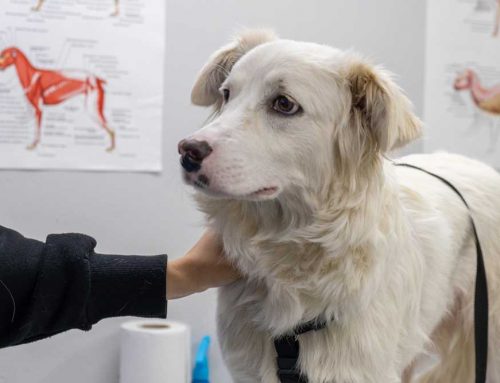
When a pet arrives with chronic diarrhea that's turned urgent, we stabilize first and investigate at the same time. That usually means a hands-on exam and bloodwork right away, IV fluids to correct dehydration, medication for nausea and pain, and imaging to look for a blockage or other urgent cause.
Your history matters as much as the tests. Tell us about the treats, the dental chews, the flavored medications, any recent diet changes, and the cat who steals from the dog's bowl. A chewed houseplant, a dropped pill, or a raided compost bin explains a surprising number of gut problems.
| Step | What it tells us |
| Fecal testing | Worms, protozoa, and bacterial imbalance, run in our in-house lab |
| Bloodwork (CBC and chemistry) | Dehydration, blood loss, protein loss, organ function, pancreatic markers, and signs of inflammation |
| Digital X-rays | Obstruction, foreign material, gas patterns, and organ size |
| Ultrasound | Intestinal wall thickness, enlarged lymph nodes, and other abdominal changes |
| CT | A detailed view of the abdomen when X-rays and ultrasound leave questions open |
| Endoscopy and intestinal biopsy | The tissue diagnosis for IBD or cancer, which we refer to a specialty hospital and help coordinate |
The veterinarians on duty run that sequence compressed into one visit, because a pet who's been sick for months and is now dehydrated needs fluids and answers at the same time. Hospitalization gives us both. If testing points toward food as the cause, your regular veterinarian can guide an elimination diet trial, which means eight to twelve weeks on a single novel or hydrolyzed protein with nothing else crossing your pet's lips. We send our records along so they can pick up right where we left off.
How Can You Keep Chronic Diarrhea From Turning Into an Emergency?
The best way to keep chronic diarrhea from becoming an emergency is to get it diagnosed while it's still manageable, then keep up with the plan. Most flares trace back to something that changed: a new treat, a raided garbage bag, a missed dose, or a stressful stretch at home.
- Get a diagnosis early: Diarrhea that's lasted more than a couple of weeks deserves a visit with your regular veterinarian before it has a chance to tip over.
- Keep meals boring: One food, measured portions, no table scraps, and only treats your veterinarian has approved.
- Stay on parasite prevention: Year-round, including indoor cats.
- Close off the hazards: Pet-proofing your home keeps trash, string, socks, and toxic foods out of reach.
- Skip the home remedies: Pain relievers from your own medicine cabinet can poison a dog or cat, and over-the-counter anti-diarrheal products aren't safe to reach for either. Keep bismuth-based stomach medications away from cats entirely, and never give an over-the-counter enema at home, because phosphate enemas can be fatal in cats.
What Flagstaff Families Ask Us About Chronic Diarrhea
How long can a pet have diarrhea before I should worry?
A single day of diarrhea in an otherwise bright, eating pet can often be watched. Diarrhea that lasts more than a couple of days, keeps coming back, or comes with any of the warning signs above should be seen. For puppies, kittens, toy breeds, and seniors, don't wait more than a day.
Is chronic diarrhea ever a sign of cancer?
It can be, especially in pets past middle age. In cats, intestinal lymphoma causes the same diarrhea, vomiting, weight loss, and thickened intestinal walls as IBD, and in dogs, intestinal tumors can cause similar signs. Imaging can raise the suspicion, but a biopsy is what settles it, which is why ongoing diarrhea in an older pet deserves a full workup.
My cat is in and out of the litter box. Is that diarrhea?
It might be colitis, which causes straining and small, frequent stools that are easy to mistake for constipation. Check what's landing in the box. Straining to urinate with little or nothing coming out is a different emergency, and in male cats a urinary blockage becomes life-threatening within hours. When you can't tell which one you're watching, treat it as urgent and call.
Can I just switch to a grain-free food from the store?
Grain is rarely the culprit. Beef, chicken, dairy, and egg cause far more food reactions than wheat or corn do, so a grain-free swap often changes the label without changing the trigger. Over-the-counter limited-ingredient foods can also pick up trace proteins on shared production lines. Switching diets on your own before testing blurs the picture, so ask your veterinarian first.
Getting Help When Chronic Diarrhea Turns Urgent
Chronic diarrhea can simmer for weeks before it suddenly becomes an emergency, and knowing the warning signs helps you act before your pet runs out of reserves. Blood, vomiting, belly pain, pale gums, weakness, or a pet who stops eating or drinking all mean it's time to come in. Veterinary Emergency and Specialty Center of Northern Arizona meets many Flagstaff pets at that hardest point, and our job is to get your pet stable and make sure you leave understanding what's been happening. If things turn urgent between Friday evening and Monday morning, reach out and come in.