
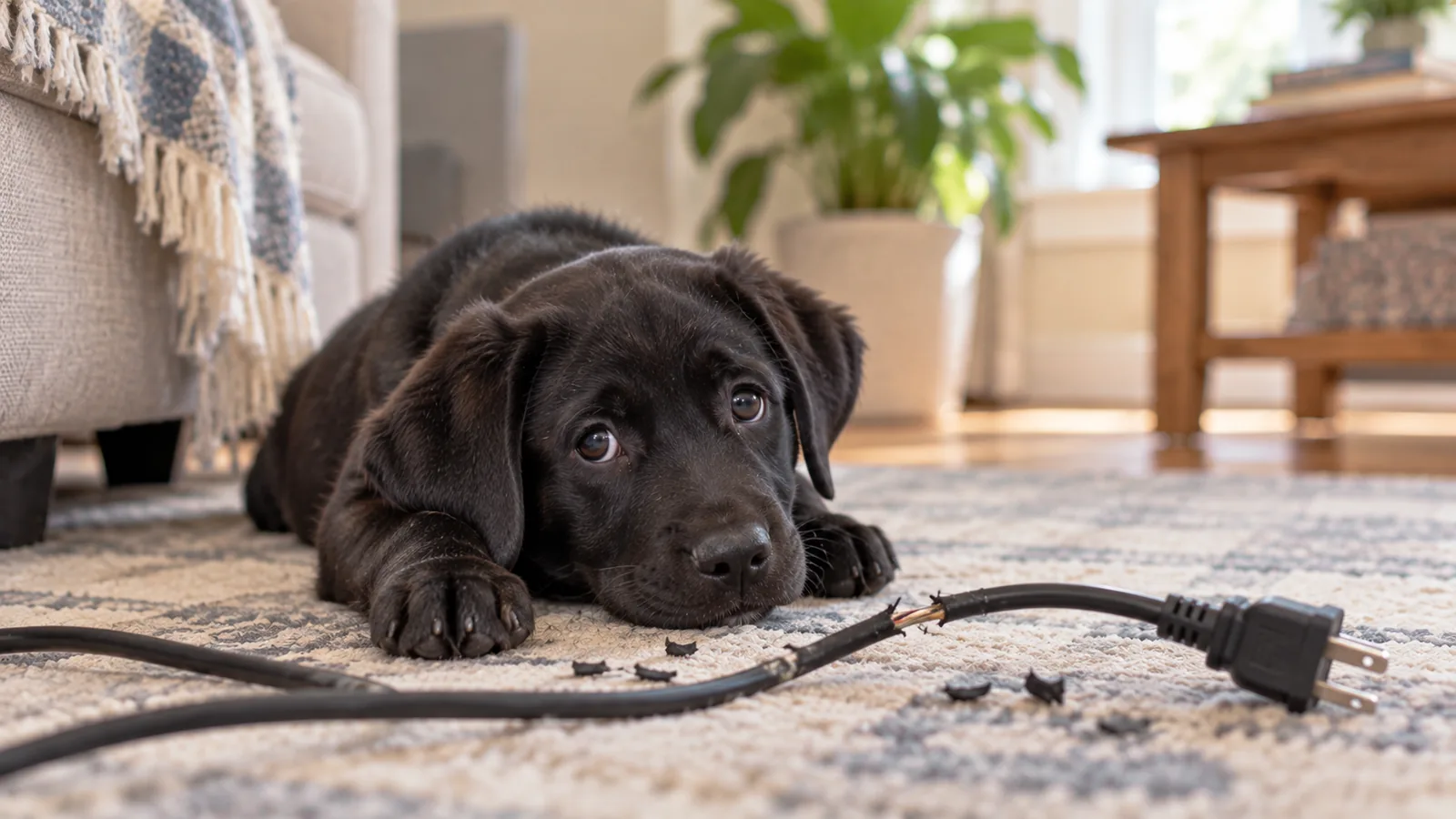
Electric shock from a chewed cord is a true emergency, even when your pet gets up, shakes it off, and acts completely normal. Your pet's mouth is wet, so the current runs straight through tissue, and the burns on the lips or tongue are often the least of the damage. The more serious problem is fluid collecting in the lungs, which can take hours to appear and shows up as labored breathing long after the moment has passed. Teething puppies and curious kittens account for most of these injuries, and simple home changes like cord covers and unplugged appliances prevent the majority of them.
Watching your pet bite into a cord is frightening, and the hard part is that you cannot tell from the outside how much current went through them. Veterinary Emergency and Specialty Center of Northern Arizona is set up for that uncertainty, with the exam, the chest X-rays, and the monitoring an electrical injury calls for, which catches the delayed effects and turns a guess into a real answer. We are an emergency hospital in Flagstaff, and we take the time to explain what we are seeing and what it means for your pet and your family. Our hours run from Friday at 5pm through Monday at 8am, so if your pet chews a cord in that window, call us on your way in.
If Your Pet Just Bit a Cord, Start Here
- Cord chewing causes most of these injuries: teething puppies and curious kittens sit at the top of the risk list by a wide margin.
- A pet who looks fine still needs an exam: the dangerous part of an electrical injury is often internal and slow to develop, which is what chest imaging and a stretch of observation are for.
- Cut the power before anyone touches your pet: a dog or cat still in contact with a live source will pass that current along to the person reaching in.
- Most of this is preventable: cord covers, unplugged chargers, and a little supervision take the majority of the risk off the table.
What Causes Electric Shock in Dogs and Cats?
Most shocks in pets start with a chewed cord, and electrical cord injury does its worst damage right at the point of contact, where the lips, tongue, and gums take the current directly. Faulty wiring and outdoor hazards make up the rest.
Puppies chew because they have to. Teething hurts, and a phone charger left on the floor has almost the same give as a good rubber toy. Kittens work differently: a cable dangling off a desk moves like prey. A bored kitten bats at it first and bites it second. Holiday light strings, laptop cables, and the wire running to a space heater all land in the same category.
Outdoors, lightning strikes and downed power lines can hurt a pet with no chewing involved at all, with severity tracking how strong the current was and how long contact lasted. Frayed wiring in a garage, an old extension cord running to a water heater, and landscape lighting with cracked insulation belong on that list too. A quick nip that breaks the circuit instantly does far less harm than a bite that locks a puppy's jaw onto the wire.
How Do You Pet-Proof a Home Against Cords and Outlets?
Pet-proofing your home works from the floor up, because a cord that disappears from view at standing height sits at mouth level for a puppy nosing around under the desk. Crouch down in each room and you'll find the ones that matter, along with the household toxins that share those same low cabinets and nightstands.
| Where the risk lives | What helps |
| Cords behind furniture and under desks | Route them through cord covers or split tubing, or tape them flat along the baseboard |
| Chargers and small appliances | Unplug and put away after use, especially overnight and when the house is empty |
| Outlets and power strips | Block access with furniture, and use outlet covers or a power strip box |
| Holiday lights and decorations | Keep the bottom few feet of the tree free of wiring and unplug when nobody's in the room |
| Outdoor wiring, pumps, and landscape lighting | Check for cracked insulation, keep circuits protected, and keep pets well away from downed lines after a storm |
Chewing prevention is less about scolding than about swapping, giving a teething puppy something satisfying to work on while the cords and cables go somewhere a mouth can't reach them. A bitter deterrent spray helps on the few you can't hide, though it wears off and needs reapplying. A puppy or kitten loose in a room with exposed wiring is a bet nobody needs to make.
What Can an Electric Shock Do to Your Pet?
Electrical injuries run from a singed lip that looks almost trivial to lung and heart damage that never shows on the outside. That range makes the visible part of the injury the worst possible guide to how serious the whole thing is.
| What the current affects | What you might notice | When it tends to appear |
| Mouth and skin | Charred or pale patches where the wire touched, drooling, reluctance to eat | Right away, with soreness building over several days |
| Lungs | Wet or crackly breathing, a soft cough, restlessness, reluctance to lie down | Often several hours later |
| Heart | Weakness, a racing or irregular pulse, sudden collapse | Minutes to hours |
| Whole body | Disorientation, wobbliness, sore muscles, gums losing their pink color | Usually early, though it can evolve |
Burns In and Around the Mouth
A cord bite leaves its mark right where the wire crossed the lips. Burns at the corners of the mouth, gray or blistered patches on the tongue, and swelling that gets worse over the next few days all need electrical burn care rather than a home ointment, since damaged tissue can keep declaring itself for a week after the shock. Injury can also occur anywhere the current entered or left the body, including a paw resting on a damp floor.
The Delayed Lung and Heart Effects
The most dangerous consequence of a shock is often fluid in the lungs, which can build for hours after a pet has already walked away from the cord looking perfectly normal. Current crossing the chest can also disturb the heart's rhythm, and an irregular beat carries no obvious outward sign at all.
Coughing, rapid or labored breathing, an elbows-out stance, or open-mouth breathing in a cat all signal respiratory distress, which is a go-now situation rather than a watch-until-morning one. Breathing emergencies move fast once they begin, and the hours you'd spend watching at home are the hours we'd rather spend watching your pet with chest films in hand.
Collapse, Seizures, and Other Whole-Body Effects
A strong current does more than burn. It can knock a pet unconscious, trigger seizures, damage muscle, and drop blood pressure into circulatory shock. Pale gums mean blood and oxygen aren't reaching the tissues the way they should, and after an electrical shock that finding sits in the same emergency category as collapse. Lift a lip and look: healthy gums are the same warm pink as the inside of your own lip, and anything white, gray, or bluish means go now.
There's also the fall to think about. A jolt can throw a cat off a counter or send a dog crashing into furniture, and internal injuries from the landing sometimes matter as much as the current did.
Is It Safe to Touch a Pet Who Just Got Shocked?
It isn't safe to touch your pet until the current is off, because a dog or cat still in the circuit passes that current straight to whoever reaches for them. Move them away from the source only after you've cut power at the outlet or breaker, or pushed the cord clear with a dry wooden object like a broom handle.
A plastic broom handle or a thick dry towel works too. Metal and anything damp will not. If there's water on the floor, stay out of it until the breaker is off, because water carries current across a room.
A few well-meant moves make this worse. Skip them:
- Don't reach into the mouth while the cord is live: the current travels through you the moment you make contact.
- Don't put ice, butter, or ointment on a burn: it traps heat and debris and makes the wound harder to assess later.
- Your own painkillers are off the table: ibuprofen and acetaminophen poison dogs and cats, and a single acetaminophen tablet is enough to kill a cat.
- Don't wait out labored breathing at home: breathing that's worsening won't turn itself around.
Once everyone's clear of the source, call on your way in so we can be ready at the door instead of starting from scratch when you pull up. Tell us what kind of cord it was, how long the contact lasted, and what your pet did afterward.
How Is an Electrical Injury Treated?
Treatment follows what the shock did to your pet. We examine the mouth and chest, listen to the heart and lungs, and in most cases keep your pet for a stretch of observation, because the lung changes that matter most can develop well after a reassuring first look.
Chest X-rays tell us whether fluid is collecting, and repeating them a few hours later tells us which direction things are heading. Our in-house bloodwork fills in the picture on muscle damage and organ function. Oxygen support is the mainstay when the lungs are wet, paired with rest and gentle handling, since a frightened pet who's struggling to breathe burns through their reserves quickly. Intravenous fluid support helps when circulation is failing, though fluids get dosed carefully in a patient whose chest is already involved. Burns need pain control and wound care, and the mouth often needs a recheck once the tissue has finished changing.
If your pet needs overnight critical care beyond our weekend hours, we coordinate the transfer to a 24-hour hospital so nobody loses time sorting that out at midnight.
What's the Outlook After an Electrical Injury?
Recovery tracks three things: how strong the current was, how long contact lasted, and which effects developed along the way. Many pets with small cord burns and clear chest films go home in good shape after prompt care and a short stay. A severe shock with lung or heart involvement carries a harder road.
Mouth burns take their time. Tissue at the lip corners can look worse on day three than it did on day one, and some pets need a recheck, soft food for a while, and occasionally a small procedure once the damaged area separates. Most eat and drink normally through all of it, and we'll tell you plainly where your pet stands.
When Does an Electrical Injury Become a True Emergency?
Trouble breathing, collapse, seizures, gray or bluish gums, and burns inside the mouth each count as a pet emergency on their own, and after a known shock any one of them means going in now instead of waiting for morning. Even with none of those present, a suspected shock needs an exam.
Seizure activity is never something to sleep on, even when it stops on its own inside a minute. The same goes for a cough that starts later that evening, or a cat sitting upright with their elbows turned out and their mouth open. When you're unsure, treat it as urgent.
If a cord bite happens outside our weekend hours, go to the nearest 24-hour veterinary hospital rather than waiting for us to open. Here in Flagstaff, we'd much rather see ten pets who turn out fine than miss the one who wasn't.
Questions We Hear After a Pet Chews a Cord
My puppy chewed a charger and seems totally fine. Can we just watch at home?
Watching at home is the plan that misses the delayed cases. Lung fluid can take several hours to build, and by the time changes are obvious across the living room, your puppy has lost the head start that treatment depends on. An exam and chest imaging sort out who needs to stay and who can go home with instructions. Most cord-chewing puppies land in that second group, and that's a result worth confirming rather than assuming.
What should I do in the first few minutes at home?
First aid for an electric shock starts at the breaker and ends in the car: cut the power, check that your pet is breathing and responsive, keep them warm and quiet, and drive in even if they seem to have bounced back. Wrap them in a blanket if they're shivery, hold off on food and water, and let someone else drive if you have the option so your hands stay free.
Are puppies and kittens really at that much more risk?
Puppies and kittens run the highest risk by a long way, and it comes down to mouths. A teething puppy needs to chew and isn't picky about the target, while a kitten treats a swinging cable as something to hunt. Grown dogs and cats do this far less often, though anxious chewers and cats who love warm electronics still manage it. For the first year, assume any wire within reach will eventually get tested, and set the room up accordingly.
Keeping Your Pet Safe From Cords and Outlets
Electric shock is frightening, and it's also one of the more preventable emergencies we see. A few cord covers, a habit of unplugging chargers, and a closed door on the room with the tangle of wiring behind the TV handle most of it. If your pet has chewed a cord, please don't talk yourself out of the visit because they're bouncing around like nothing happened. Veterinary Emergency and Specialty Center of Northern Arizona is open through the weekend here in Flagstaff, and you can reach out if you aren’t sure what you’re seeing is an emergency.