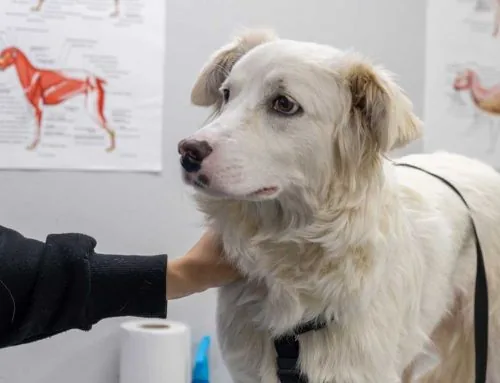


Addison's disease in dogs gets missed so often because the signs come and go, and a bad week that clears up on its own looks like nothing more than a stomach bug. Veterinarians call it "the great pretender" for good reason. Also called hypoadrenocorticism, it is a shortage of the adrenal hormones that hold blood pressure, electrolytes, and the body's stress response steady. A dog with some reserve left coasts through ordinary days, until one stressful week tips into an Addisonian crisis, a collapse that can turn deadly within hours.
The signs that mean to come in now are not subtle: collapse, weakness that leaves your dog unable to stand, vomiting and diarrhea that will not stop, trembling, pale gums, and a heart rate that slows instead of racing. Veterinary Emergency and Specialty Center of Northern Arizona is open in Flagstaff from Friday at 5 p.m. through Monday at 8 a.m., with the critical care expertise to treat a dog in shock while we start with bloodwork to find the cause. A crisis needs IV fluids, electrolyte correction, and fast-acting steroids within hours, and most dogs turn around quickly once that treatment starts. If your dog is down, weak, or getting worse by the hour and your regular vet is closed for the weekend, call us on your way in.
Addisonian Crises in Dogs: The Basics
- Addison's disease is a shortage of adrenal hormones, and the signs tend to come and go rather than build steadily
- A dog can look perfectly well between episodes, which is why the diagnosis often arrives months or years after the first bad spell
- An Addisonian crisis is a sudden collapse with dangerously high potassium, low sodium, and falling blood pressure, and it needs IV fluids and injectable steroids right away
- Crisis complications can include heart rhythm problems, gut bleeding, and low blood sugar
What Is Addison's Disease, and What Does It Do to a Dog's Body?
Addison's disease develops when the adrenal glands stop producing enough of two hormones a dog can't function without:
- Cortisol: the stress hormone. It keeps blood sugar up, blood vessels responsive, and the gut lining healthy when your dog is sick, frightened, or hurt.
- Aldosterone: tells the kidneys to hold onto sodium and let potassium go.
Most cases are primary hypoadrenocorticism, in which the immune system slowly destroys the adrenal glands. A less common secondary form follows long-term steroid use or a pituitary problem. Any dog can develop it, though Standard Poodles, Portuguese Water Dogs, Bearded Collies, and young to middle-aged females are diagnosed most often.
Why Does Addison's Disease Go Unnoticed for So Long?
Addison's goes unnoticed because the signs let up on their own. A dog falls apart under stress, recovers with rest or a round of fluids, and looks healthy again by the recheck, so the episodes get other names: a stomach bug, something they ate on the trail, too much excitement at the dog park.
Recurring vomiting and diarrhea is one of the most common reasons families end up in our Flagstaff lobby on a Saturday night, and most of those dogs do have a simple digestive upset, which is exactly why the rare adrenal case slips through.
| What families notice | The usual explanation | Why Addison's fits too |
| Vomiting and diarrhea every few months | A passing bug | Low cortisol leaves the gut struggling under stress |
| A crash after boarding, surgery, or travel | A tired dog | Stress is the exact demand these glands can't meet |
| Shaking, weakness, skipped dinner | Pain or an off day | Falling sodium and climbing potassium sap strength |
A dog with repeated vague illness who bounces back fast every time deserves adrenal testing rather than another round of bland food, because every missed episode leaves room for the next one to be a crisis.
What Are the Signs of Addison's Disease in Dogs?
Addison's signs are vague and overlapping, and not one of them belongs to Addison's alone. The ones reported most often are tiredness and weakness, vomiting, a poor appetite, gradual weight loss, drinking and urinating more, trembling, and belly pain.
Recurring diarrhea has many possible causes, from parasites to inflammatory bowel disease, so the adrenal glands often come up only after other tests read normal. Belly pain and retching can look like an obstruction or bloat, and a painful dog who retches without producing anything needs to be seen within the hour.
What Happens During an Addisonian Crisis?
An Addisonian crisis is acute circulatory collapse caused by a sudden, severe shortfall of cortisol and aldosterone. Blood pressure falls, sodium drops, potassium climbs high enough to slow the heart, and blood sugar can sink. Without IV fluids and injectable glucocorticoids, a dog can die within hours.
What Sets Off a Crisis?
A crisis usually follows an ordinary stress a healthy dog would shrug off, and in an undiagnosed dog it's often the first time anyone suspects Addison's. Common triggers include:
- Everyday stress: the dog park, a kennel stay, a long drive, or a house full of guests
- Illness or procedures: vomiting, an infection, a dental cleaning, or surgery
- Gaps in treatment: a late DOCP injection, missed prednisone, or vomiting that keeps pills from staying down
- Stopping steroids suddenly: in dogs on long-term steroids for another condition, the adrenal glands may not catch up
What Goes Wrong Inside the Body?
Several systems fail at once, and each one makes the others worse.
- Circulation: Without aldosterone, sodium pours out in the urine and takes water with it. Without cortisol, blood vessels stop tightening on cue, and blood pressure falls.
- The heart: Potassium the kidneys can't clear builds up and disrupts the heart's electrical signals, which is why the heart rate slows when you'd expect it to race.
- Blood sugar: Cortisol keeps glucose available between meals, so a dog who hasn't eaten in a day or two can run dangerously low and develop hypoglycemia.
- The gut: Low cortisol and poor blood flow leave the stomach and intestinal lining open to ulcers and bleeding.
- The kidneys: Less blood reaches them, so kidney values climb, and sodium loss keeps them from concentrating urine. The result can look a lot like kidney failure.
What Does a Crisis Look Like at Home?
What families see is a dog who went from slightly off to unable to stand, often inside a day. Some seem fine at breakfast and are down by dinner.
| What you might see | What's happening inside |
| Weakness, collapse, or trouble standing | Low blood pressure and high potassium sapping muscle strength |
| A slow heart rate or weak pulse | Potassium disrupting the heart's electrical signals |
| Pale gums, cold paws and ears | Poor circulation as the body runs low on fluid |
| Vomiting, diarrhea, or blood in vomit or stool | Low cortisol and poor blood flow injuring the gut |
| Trembling, confusion, or seizures | Low blood sugar, low sodium, or both |
Any of these is a pet emergency. In a dog with known or suspected adrenal insufficiency, collapse, pale gums, vomiting that won't stop, or weakness that's worse every hour means being seen immediately rather than watched overnight.
Never try to get food, water, or human medication into a collapsing dog. A dog who can't hold their head up can't swallow safely, and nothing in a home medicine cabinet raises cortisol. If your veterinarian has prescribed an emergency steroid injection, give it as directed and still come straight in, keeping your dog warm and quiet on the drive.
What Complications Can an Addisonian Crisis Cause?
Most dogs who reach treatment in time recover well, but a crisis can set off complications that need their own care, which is why dogs stay hospitalized rather than heading home after the first dose. Many dogs have none of them.
Dangerous Heart Rhythms
Very high potassium changes the heart's rhythm in stages, from a slow rate to skipped beats to rhythms that can stop the heart entirely. Potassium is treated as the first emergency, and the heart is watched continuously until the numbers come down.
Bleeding in the Stomach and Intestines
Gut bleeding ranges from mild to severe enough to need a blood transfusion. Dehydration can hide anemia (a low red blood cell count) at first, so bloodwork may look normal on arrival and then drop once fluids go in.
Kidney Strain
Most kidney changes during a crisis come from poor blood flow and reverse with fluids. Bloodwork is rechecked to confirm the values are falling, because true kidney injury needs a different plan.
Low Blood Sugar and Seizures
Low blood sugar can cause weakness, disorientation, and seizures. IV dextrose, a sugar solution, corrects it, and it usually stays steady once steroids are on board.
Aspiration Pneumonia
A weak, vomiting dog can inhale stomach contents into the lungs. Rarely, Addison's also temporarily weakens the esophagus, the tube that carries food to the stomach, which raises that risk. Coughing, fast breathing, or fever during recovery needs prompt attention.
Problems From Correcting Sodium Too Fast
Sodium that has drifted low over days or weeks has to come back up slowly. Raising it too fast can damage the protective coating around nerves in the brain, a rare condition called osmotic demyelination that shows up days later as weakness, wobbliness, or behavior changes. Frequent electrolyte checks are how we prevent it.
How Is Addison's Disease Diagnosed?
Diagnosis of Addison's Disease usually begins with a chemistry panel, where a low sodium-to-potassium ratio turns up in roughly 80 to 90 percent of classic cases. In a collapsing dog, the veterinarian on duty reads that result alongside blood sugar, kidney values, and the heart rhythm to decide what needs treating first. Atypical Addison's is the exception: electrolytes can look entirely normal while cortisol is still deficient, so a tidy sodium-to-potassium result doesn't rule the disease out.
The ACTH stimulation test confirms it by measuring cortisol before and after a dose of synthetic ACTH. A blunted or absent rise means the adrenal glands can't respond. Other tests round out the picture:
- Urinalysis: shows how well the kidneys are concentrating urine.
- X-rays and ultrasound: rule out other causes, and ultrasound may show small adrenal glands.
- An ECG: a tracing of the heart's electrical activity, which shows an abnormal heart rhythm caused by climbing potassium and tells us how urgently to treat it.
How Is an Addisonian Crisis Treated?
Treatment for an Addisonian crisis restores circulation, protects the heart, and replaces cortisol, all at the same time. Treating shock is the first hour's work, and a dog in crisis stays hospitalized with us through it. Care typically includes:
- Restore circulation with IV fluids, which refill the blood volume and dilute the potassium that's slowing the heart. As blood flow to the kidneys returns, they start clearing potassium on their own.
- Protect the heart if potassium is dangerously high. IV calcium shields the heart muscle within minutes, and dextrose, sometimes with insulin, moves potassium back into the cells.
- Replace cortisol with a fast-acting glucocorticoid given into the vein. Dexamethasone is often chosen first because it doesn't interfere with the ACTH stimulation test, so diagnosis can continue during treatment.
- Protect the gut with medications that reduce stomach acid and help ulcers heal, plus a transfusion if bleeding has caused significant anemia.
- Monitor closely, including heart rhythm, blood pressure, blood sugar, urine output, and electrolytes, with sodium raised gradually.
A dog who arrived unable to lift their head is often standing and interested in food within hours, and a rebound that fast points hard toward Addison's even before test results are back. Hospital stays usually run a few days. Once your dog is eating, the injectable steroid gives way to an oral one and lifelong hormone replacement starts.
What Does Long-Term Treatment for Addison's Disease Involve?
Long-term Addison's Disease treatment is hormone replacement for life: a mineralocorticoid for sodium and potassium, and a low daily glucocorticoid for the stress response. Dogs on steady therapy generally feel normal and go back to everything they did before.
| Part of treatment | Hormone it replaces | How it's given | What gets monitored |
| Mineralocorticoid | Aldosterone | A long-acting injection, DOCP, every 25 to 30 days, or oral fludrocortisone daily | Sodium and potassium, with the dose adjusted to the results |
| Glucocorticoid | Cortisol | Prednisone or prednisolone by mouth at a low daily dose, raised during stress | Energy, appetite, thirst, and weight, plus a full panel once or twice a year |
Electrolytes are rechecked around each injection interval until the dose settles, and then the visits spread out.
What Is Life Like With an Addisonian Dog?
Life with an Addisonian dog looks close to normal. They hike, board, swim, travel, and play like any other dog. The baseline glucocorticoid dose covers an ordinary day, not a hard week, so you learn to give an extra dose, called a stress dose, before a demanding stretch becomes a problem. Reading your dog's body language for signs of fear, anxiety, and stress helps you know when they need that extra help. Stress dosing covers:
- Illness or injury: vomiting, a new limp, or a wound
- Procedures: tell your veterinarian before a planned surgery or dental cleaning so the dose can be raised ahead of time
- Travel and boarding: a long drive, a kennel stay, or a house full of holiday guests
- Extreme heat: Flagstaff summers are mild, but a hot car or a midday hike still counts, and heat stroke is its own emergency
- Anything off the routine: a move, a new dog, or a week of fireworks
Your veterinarian can prescribe extra prednisolone for trips, and some families keep injectable dexamethasone on hand for an illness far from a clinic.
Our weekend hours in Flagstaff run Friday evening through Monday morning, so a Saturday crisis comes straight to us, while a Tuesday crisis goes to your primary veterinarian or the nearest open emergency hospital. Either way, say right away that your dog is Addisonian and bring medication names and the date of the last injection.
Between visits, watch energy, appetite, and stool, because those slip first. In an Addisonian dog, vomiting or loose stool is never just a bug until it's been checked.
What Families Ask Us About Living With Addison's
Can Cats Get Addison's Disease?
Cats can, but it's rare. The signs, bloodwork changes, testing, and treatment look much the same as in dogs.
Why Is My Addisonian Dog Drinking and Peeing So Much?
Without enough aldosterone, the kidneys lose sodium and water follows it out, leaving your dog thirsty. It usually settles once the mineralocorticoid dose is right. If it doesn't, or you notice straining, accidents, or blood in the urine, your dog may have urinary tract symptoms with a separate cause.
Can My Dog Ever Come Off the Medication?
No. Destroyed adrenal tissue doesn't grow back, and stopping or badly missing a dose can put a stable dog back into crisis. The dose usually settles into something predictable, and most dogs live a full, normal span.
Catching Addison's Disease Before the Crisis
Dogs with Addison's disease who start treatment before a crisis hits have an excellent outlook and skip the hospital stay and complications a crisis can bring. If yours has had a few unexplained bad weeks, ask about adrenal testing, especially when a digestive workup has come back clean.
Reach out to us at Veterinary Emergency and Specialty Center of Northern Arizona if your dog is in one of those stretches on a weekend and we'll look for the pattern behind it, and if your dog is down and can't stand, come straight in and call on the way.